

Just Play! - Olympic Lessons Learned
Olympic Lessons Learned Part 2 - Winter Olympics 2026

If you haven’t figured it out by now, I love sports. There’s no greater sports spectacle than the Olympics which comes around every 2 years (Summer/Winter).
In 2024, shortly after I started writing on Substack, I was inspired to write what I now have to call “Part 1 of Olympic Lessons Learned (Summer)” which I’ve linked at the end of this post.
Based on last weekend’s Olympic Gold Medal moments from the USA Hockey Teams and Alysa Liu (figure skating), I’m pre-empting this week’s regularly scheduled post with an “audible”.
Do You Believe?
There are a handful of sports calls that don’t just live in your memory… they live in your soul. One of them is clearly Al Michaels in Lake Placid in 1980:
“Do you believe in miracles? Yes!”
Most of us file that away as a line about an underdog winning against all odds.
I’ve personally translated this as “Believing In Yourself”, “Believing In Your Team”, and “Performing Under Pressure.”
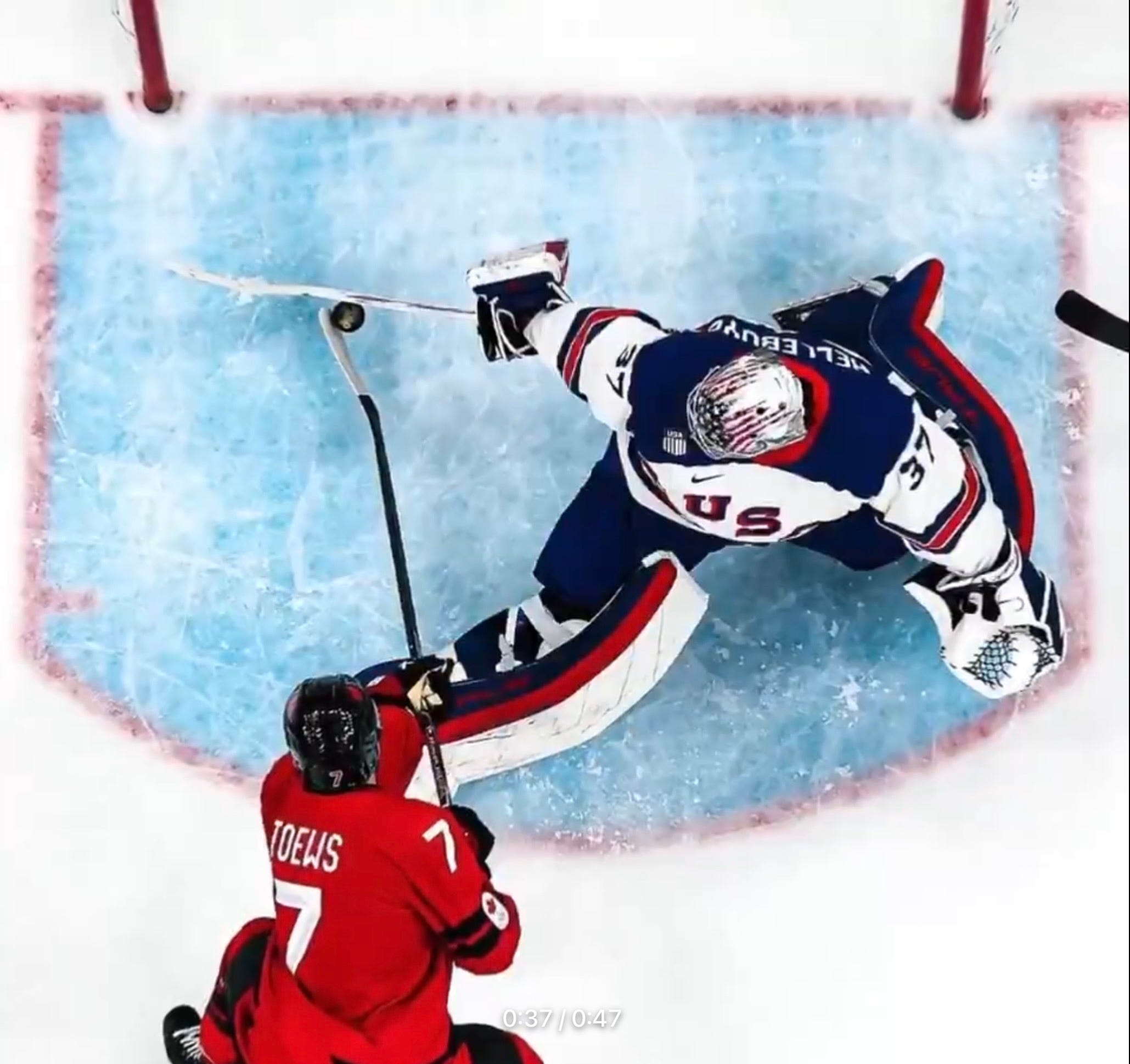
On Sunday, with the U.S. Men winning the Olympic gold in hockey for the first time since 1980, this time vs the superior Canada, I‘m reminded once again that “Belief” is the required ingredient for success.
The USA Women’s Hockey team had just secured their own gold the day before by also beating what appeared to be a superior Canada team. Down 0-1 with 2 minutes to play in the 3rd period, their team captain Hilary Knight turned her belief and grit into the tying goal to keep the game alive before Megan Keller sealed the US victory with the golden goal in overtime.
The best athletes and the best teams show up in the highest pressure moments, and if you pay attention to how they perform and what they say post-game, there is a clear pattern that can be summed up as:
“They just believed, and they just played.”
And you will almost always here them say
“We played as a team.“
So I have three questions for you which have inspired this post:
Do you believe in yourself?
Do you believe in your team?
Do you “Just Play”?
I’m convinced that when you believe and “just play”, you will stop trying to manage the moment, you will simply perform the thing you’ve trained so hard for outside the spotlight, and you will perform at your highest level on the most pressure packed stage.
Any athlete, or even casual weekend warrior golfer, will tell you the same. When you “just play”, you play better. And when you think too much or try to manage the moment, you play worse.
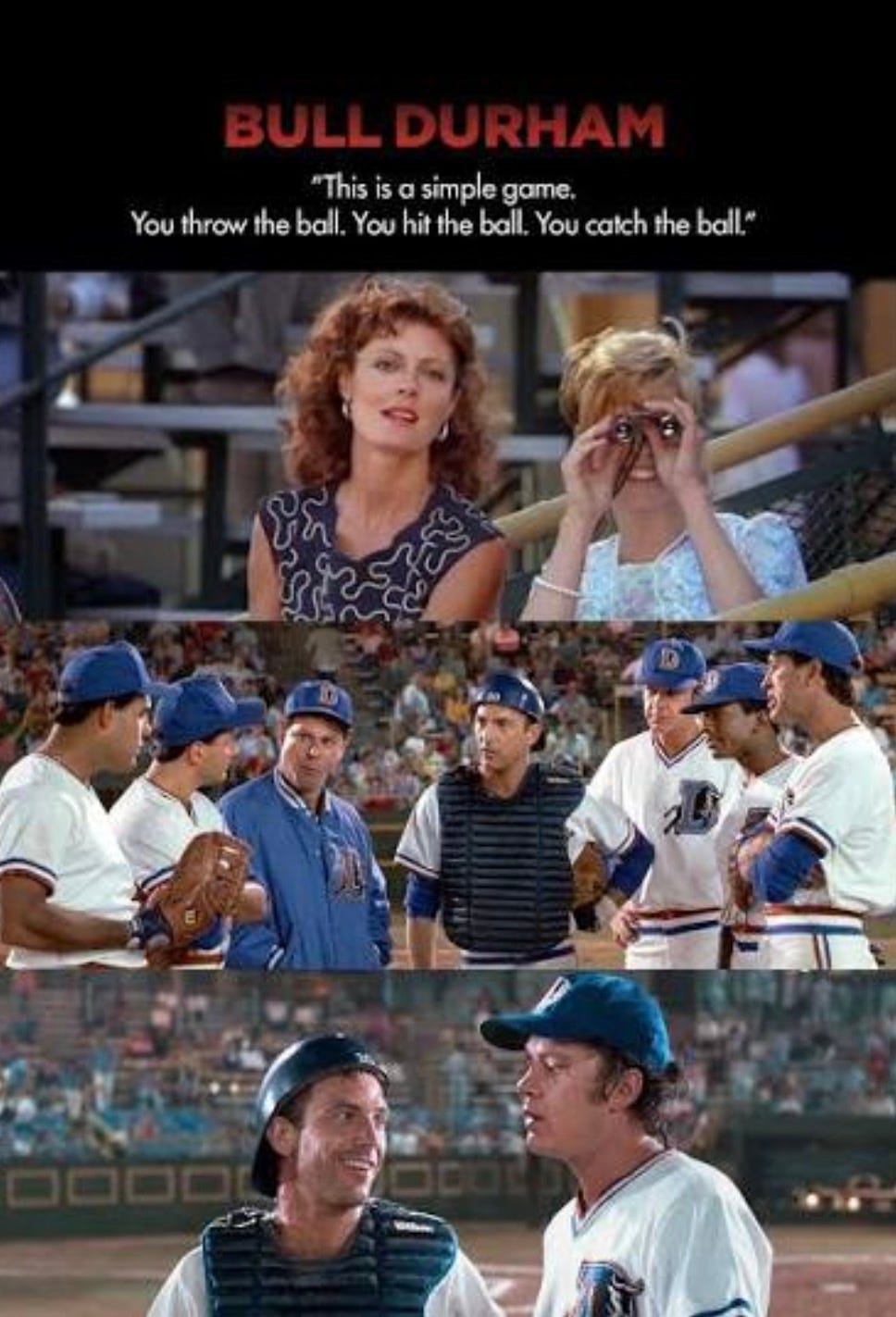
“Don’t Think Meat! Just Throw!”
“Don’t Think. It Can Only Hurt the Ball Club.”
Ok, back to the Olympics.
This same “Just Play” is where the unexpected gold-medals come from.
1980 and 2026 was pure belief and trusting each other.
The 1980 Miracle on Ice gets told like a fairy tale: a group of American kids beating the Soviet machine and shocking the world.
But we all mostly forget that the USA vs Russia game wasn’t the gold medal game. The team still had to go win the next one, which they won much easier because I’m convinced they now believed in themselves. If they could beat Russia, they could beat anybody. Their performance on the ice that day in that gold medal game showed that clearly.
Those that watched the most recent 2026 Gold Medal game may have saw what I saw. I saw a gritty USA team who was simply skating and playing as hard and as best they could - leaving it all on the ice.
I also saw the superior Canada team pressing. Missing on 2 open breakaways and again on 2 open nets. I saw a Canada team playing more deliberately and carefully.
In high school, my tennis coach said something to me in high school I’ll never forget. He said, “You were playing to keep from losing, and you almost did.”
I now notice this not only in myself, my team, and other teams, but it’s very clear in pro sports during the most critical games at the most critical moments.
So here’s another Cook Axiom:
“When you start playing to ‘not make mistakes’, you stop making plays.”
Megan Keller of Team USA Hockey summed up both my tennis coach and my own take when describing her golden goal in overtime to beat Canada:
"I was just trying to make a move, take a chance," Megan Keller said. "I was trying to win, not play to not lose. That's what we talked about in the locker room."
Alysa Liu
An even better example of how I’m trying to influence everyone to believe with this post is Alysa Liu - our gold medal USA figure skater. Similar to our USA Men’s Hockey Team, the USA had not won figure skating gold since 2006 (20 yrs).
She “retired at 16” after the 2022 Beijing Winter Olympics. She didn’t like the pressure and everything about the sport. She came back at 19 and was very clear about skating on her own terms. “Nobody tells me what I’m going to wear or my hair or what song I’m skating to…” while she was being told by so many in the sport that the judges might be concerned with her look or simply how she behaved.

She “Just Played.”
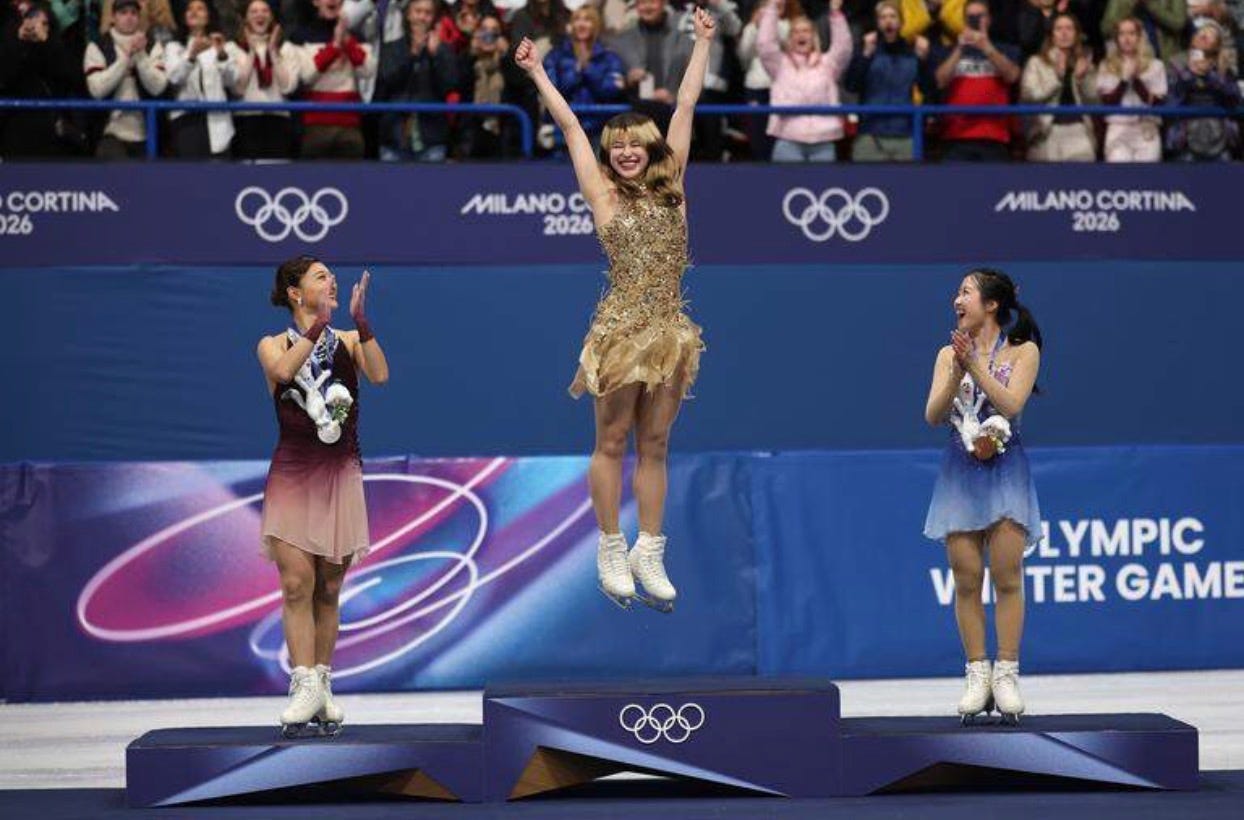
As she skated off the ice moments after her gold medal winning performance she looked into the camera and said:
“That’s what I’m f***ing talking about!”
She went on to say in the post-interview:
“I don’t need this. But what I needed was a stage, and I got that. So I was all good, no matter what. If I fell on every jump, I would still be wearing this dress, so it’s all good.”
And when an interviewer asked Liu whether she feels stressed at the Olympics, she didn’t hedge.
“Oh hell no… Competitions are where I’m least stressed because people get to see what I do. That’s why I do it. So I can share my work.”
And then she said something that basically summarized my attempt at this whole leadership lesson in one breath:
“I really don’t feel nervous. I don’t feel the pressure… I invite it all in. So, no matter what happens, it’s a story.”
I knew right then and there I had to write this post to memorialize this onto the internet so that some other young women or men might just find the post and be inspired to simply believe in themselves and to “just play”!
My wife said, “She just went out there and had fun.”
Which brings me to another key point - culture and environment.
“Freedom” is almost always an environmental construct. It’s designed and/or you simply allow yourself to have it.
It happens when you trust yourself and you trust the people around you enough to stop bracing for impact.
Where this shows up in your team and your leadership.
I’ve been in enough boardrooms, exec and team meetings where “we have to get this right” yields the same pattern:
The environment can either show up like:
If I say the truth, I’ll get punished.
If I miss, I’ll be blamed.
If I take a risk, I’ll be exposed.
…or like Alysa Liu and the USA Hockey Teams:
We’ll tell the truth faster if we are honest about what we learned from our mistakes.
We’ll learn in public without shaming each other.
We’ll keep playing with grit and attitude until the final whistle.
Real belief sounds like:
I belong here.
I can do my job when it matters.
My teammate will do theirs.
We’ve been here before in practice, in reps, in hard moments. We know what to do next. We need to just go do it.
That’s what a winning team feels like on the inside.
This is the company and team environment you need to create as a leader… helping people to believe in themselves, challenging them for greatness, and making sure they stay loose and “just play”.
Three questions to ask your team:
1) Do you believe in yourself?
Not “are you confident.”
I mean: Do you trust your preparation enough to simply make the play?
2) Do you believe in your teammates?
Do you trust them enough to pass the puck?
Do you trust them enough to let them take the shot?
Do you trust them enough to say the hard thing without you retaliating?
3) Do you believe this pressure is a threat… or an opportunity?
Because your team will follow your framing.
Leaders accidentally make moments heavier all the time by narrating risk, consequences, broadcasting pressure and panic, or turning everything into what others will thin.
Winning leaders do something different.
They acknowledge the stakes. Then they say, in one form or another:
“This is our moment. Just play.”
Which can be summarized as another Cook Axiom:
“The environment you create determines the performance you get.”
For those that want to continue on this theme, here was Part 1 from Summer Olympics 2024:
7 Olympic Lessons Learned

As we wrap the 2024 Paris Olympics, these 7 lessons learned are worthy candidates for this week’s newsletter.
