


I was driving across the country recently — I do this a few times a year, believe it or not. When you are in that open expanse of “big sky” and “big land,” you have a lot of introspective thinking time.
The words “potential,” “capabilities,” and “blockers,” for some reason, were resonating in my thoughts.
I’ve dealt with all three personally and summarized the three words in my head as follows:
Potential is seductive, capabilities are impressive, but blockers are real.
We fall in love with the upside, we glamorize our capabilities, and we underestimate our personal blockers that stand between today’s reality and tomorrow’s promise.
We’ve seen this movie before.
The early Internet boom.
Mobile computing.
Cloud infrastructure.
Streaming media.
And now: AI.
Some of the greatest companies in history—NVIDIA, Amazon, Google, Tesla, Netflix—were built at the intersection of massive potential, world-class capabilities, and very real blockers. The market tends to massively overestimate what they can do in 1–2 years and underestimate what they can do in 5-10 years.
AI today is the perfect case study.
NVIDIA has world-class capabilities: industry dominance, superior architecture, unmatched ecosystem effects, extraordinary customer demand, and a flywheel that most companies would kill for.
It also has world-class potential: the entire AI industry is still in its infancy. A decade from now, we’ll still be describing this moment as “the early innings.”
But NVIDIA, and nearly every AI company riding this wave, also has serious blockers:
Manufacturing capacity
Supply chain scale
Talent bottlenecks
Power infrastructure and data center constraints
Regulatory conversations that haven’t even started
Competitive responses from giants with infinite capital
Customer readiness
Enterprise adoption cycles slower than market narratives
If you’ve sat in an executive seat during hyper-growth, you know this truth in your bones:
Your greatest potential always collides with your hardest blockers at the moment expectations are highest.
The Market’s Favorite Illusion
Markets love stories. And the story right now is AI. Yes, a generational breakthrough, a platform shift, a once-in-50-years technological wave.
And yet…
Most companies do not scale linearly with demand.
They scale in S-curves, repeatedly punctuated by blockers that slow progress until the next capability unlocks.
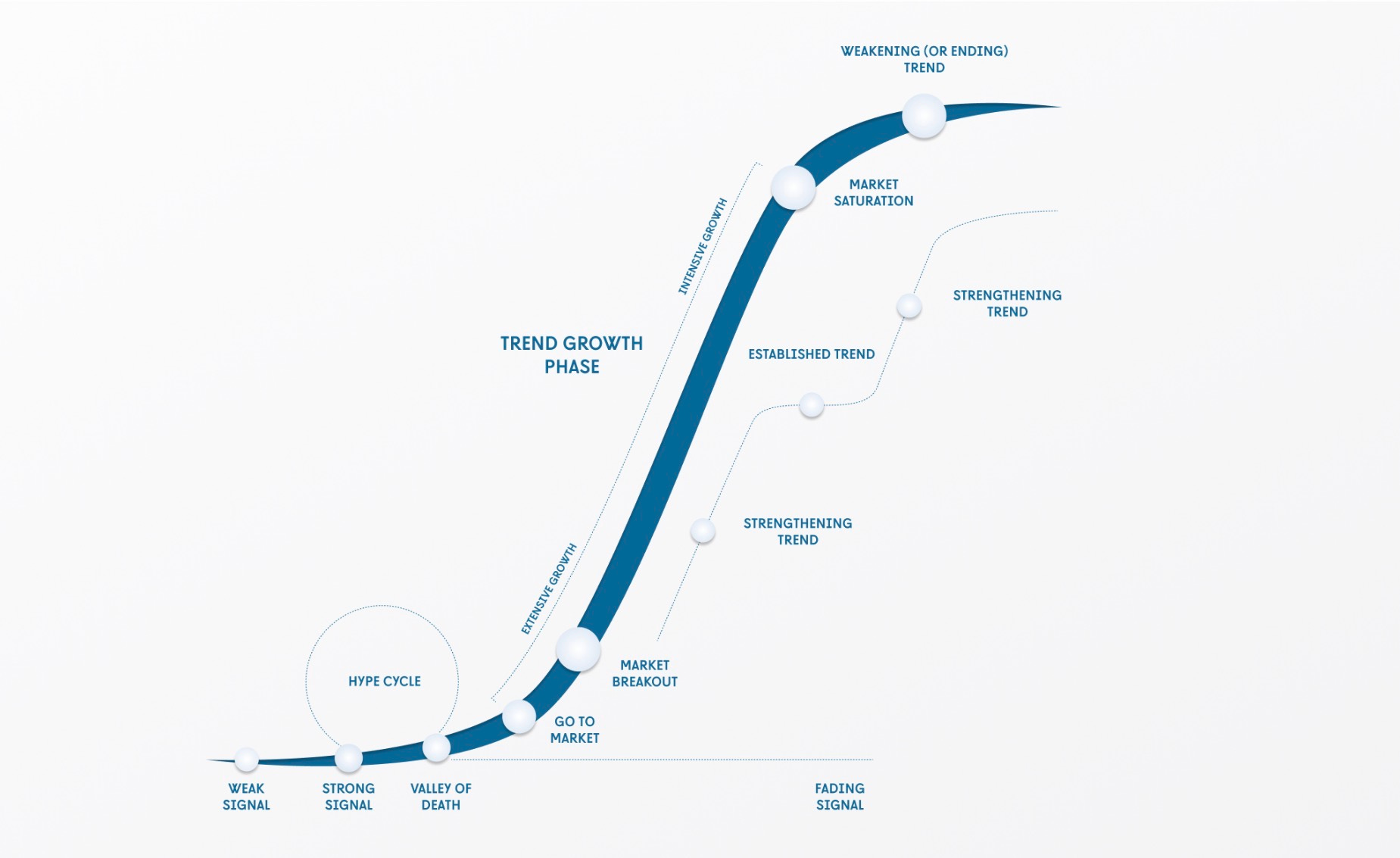
The market, however, prices companies as if S-curves are smooth upward lines.
When a company’s potential becomes obvious, investors want all of that future now. They compress 10 years of value into 10 months of expectations.
But inside the company, where leaders are trying to hire teams, secure supply chains, build facilities, navigate governments, and design long-term roadmaps, our reality is far more complex.
NVIDIA’s blockers are very real. And the timeline to navigate them is longer than the market’s impatience typically allows.
The same was true for:
Amazon Web Services in the mid-2000s (power and data center constraints)
Netflix in the late 2000s (content licensing and broadband limitations)
Tesla in the 2010s (manufacturing and battery scaling)
Google Cloud in the 2010s (enterprise sales and readiness)
Apple repeatedly (supply chain, manufacturing scale, component innovation)
Potential does not equal speed.
Capabilities do not guarantee timing.
Blockers are never fully priced in or priced in too early.
A CFO’s Lens: Blockers
CFOs live at the intersection of:
Vision (potential)
Execution (capabilities)
Constraints (blockers)
The financial leader is often the only person in the room forced to view the company not as the world wants it to be, but as physics, capital, headcount, infrastructure, and time actually allow it to be.
Blockers are are the work.
From inside the cockpit, the story looks different:
If demand is overwhelming, manufacturing becomes the bottleneck.
When manufacturing scales, logistics becomes the bottleneck.
When logistics stabilizes, talent becomes the bottleneck.
When talent ramps, power and infrastructure become the bottleneck.
When infrastructure gets solved, regulation becomes the bottleneck.
And when all that clears, customer adoption becomes the bottleneck.
It’s a relay race with no real baton passes. It’s a race of continuous constraints shifting across the system.
The external market narrative simplifies all of this into a too simple framing:
“If demand is huge, shouldn’t success be linear?”
Inside a business, nothing is linear.
The Long-Run Rule: Great Companies Win Because They Outlast Their Blockers
If you zoom out, here’s what you see:
Amazon spent 20 years building their logistics empire (1994-2014)
NVIDIA spent 2 decades (2000-2020) building capabilities that suddenly feel like genius overnight.
Tesla almost went bankrupt several times from 2008-2018 until they finall unblocked manufacturing physics.
At Netflix, we weathered the critics through multiple revolutions — DVD → streaming → originals → global → now live tv.
The pattern:
Potential becomes obvious to the world.
The market gets ahead of itself.
Reality intervenes.
Blockers take longer than expected.
Capabilities catch up.
The company matures into its potential.
Investors overreact both positively and negatively in the short term.
True operators win in the long term.
A Leadership Challenge: Are You Honest About Your Own Blockers?
Every startup and every executive team must answer three brutally honest questions:
What is our true potential?
What capabilities do we already have?
What blockers, internal and external, stand in our way?
Now the operator's work is sequencing the potential, capabilities, and blockers on the S-curve into a growth plan the company fund, operate, and scale.
If that sounds a lot like aligning Strategy → Structure → Execution, well, it is… just another of my 7 × 7 ways of communicating the same mantra.
Focus on your blockers. Blockers are the starting point to defining your strategic path.
The teams that win are the ones who see reality crisply and navigate it with discipline.
